About this Certificate Program.

The first and last class and the retreat will be simultaneously live in MA and on Zoom to accommodate participants from near and far.

“Intensive” is an academic year-long couples and family therapy certificate program in which you will learn a replicable transtheoretical family and couples therapy model using evidence-based and other foundational family systems practices. Participants learn to hold effective meetings that support work with families, couples, individuals, and all working groups. We teach ideas and tools from enduring and newer theories, integrating concepts from related fields including trauma, child welfare, interpersonal partner violence, neurobiology, and mindfulness. Students learn through an intentional blend of didactic, discussion, demonstration, and doing.

We teach an artful balance of owning our facilitative leadership role in a therapeutic stance that honors clients’ agency and preferred ways of living. Participants greatly enhance the foundation of their work, graduating with greater confidence and an evolving systemic practice that fits their clinical style and populations served. The “Intensive” couples and family therapy certificate program is scheduled for a full day approximately once a month to allow for work/life balance. Our three day retreat in the woods near the ocean in Essex MA is a highlight of the course.

  • Teaching theoretical lenses and interventions to facilitate change from a range of family systems perspectives
  • Shifting from an individual focus to a facilitative, multi partial stance to enhance relationships of all kinds
  • Identifying, modeling, and practicing a myriad of questions from systemic therapies as powerful interventions
  • Working with skill, humility, and respect across intersecting identities, historical trauma, physical, and mental health challenges
  • Focusing on improved safety and well-being for everyone involved
  • Teaching evidence-based practices that are client and outcomes driven with opportunities to critique the relevance and applications of each model
  • Emphasizing the use of client feedback to guide the work
  • Demonstrating a strength based, collaborative therapeutic stance
  • Teaching modes of inquiry and witnessing that enhance capacity for client self-reflection, responsibility taking, and mentalizing
  • Increasing practitioner skill, capacity, and creativity as it applies to challenging situations
  • Using live demonstrations of role play families to enhance the learning
  • Providing real time practice with live coaching to integrate new practices
  • Sharing step by step exercises to facilitate learning of complex strategies
  • Focusing on working with a diverse range of families, couples, and presenting problems
  • Addressing the effects of social constructions of race, ethnicity, class, gender, sexual orientation, ability and other differences that impact individual, couple, and family wellness and functioning
  • Attending to the individual learning needs of practitioners with a range of experience
  • Creating a connected community of supportive learners
  • Sharing tools to help participants implement and teach these skills
  • Class 1: Understanding General Systems Theory: Observing a System, Listening to Multiple Perspectives, Systemic Formulation of Problems
  • Class 2: Useful Concepts and Interventions from Structural Family Therapy
  • Class 3 Retreat: Six Phase Model for Holding Successful Meetings
  • Class 4: Seeing Problematic Patterns Not Problematic People: Useful Strategic Concepts
  • Class 5: Assessing Relational and Intergenerational Patterns
  • Class 6: From Causes to Constraints: Assessment & Intervention In Socio-Political-Cultural Contexts
  • Class 7: Solution Focused Work and Broadening the Lens
  • Class 8: Introduction to Narrative Work: Seeing People as Being in a Relationship with Problems
  • Class 9: Inviting Responsibility for Change: Working with Challenging Behavior in Narrative Ways
  • Class 10: Integrating Models – Our Transtheoretical Approach
  • Class 11: Working with Challenging Behavior, Part 2 – Mindfulness and Managing Conflict
  • ​Class 12: Reviewing the Year: Sustaining Change and Saying Goodbye in Couple and Family Work

Note: detailed learning objectives for each day of the course are provided to participants and for continuing education approval processes.

  • Identify the purpose, practice and two questions associated with each phase of the 6-phase model.
  • Explain how the use of the concept of interpersonal patterns is foundational to working well across different ethnicities and with other marginalized identities.
  • Describe the cycle of family development and explain how it applies to reframing problems.
  • Describe the problem focused genogram.
  • Explain the model of change from the perspective of each of the following models: general systems theory, structural family therapy, brief strategic therapy, Bowen family therapy, solution focused and narrative therapy.
  • Identify two strategies for assessment used in each of the following models: general systems theory, structural family therapy, brief strategic therapy, Bowen family therapy, solution focused and narrative therapy.
  • Identify two interventions that apply to the use of each model: general systems theory, structural family therapy, brief strategic therapy, Bowen family therapy, solution focused and narrative therapy.
  • Describe one practice for developing treatment goals and plans to address safety issues from the lenses of: general systems theory, structural family therapy, brief strategic therapy, Bowen family therapy, solution focused and narrative therapy.
  • List two questions to ask clients that are used in the practice of each of these models: general systems theory, structural family therapy, brief strategic therapy, Bowen family therapy, solution focused and narrative therapy.
  • Describe the collaborative helping map and explain how it informs effective work with a wide range of presenting problems, ethnicities and people with other marginalized identities.
  • Describe the Racial/Cultural Identity Development Model and the White Racial Identity Development Model.
  • Apply concepts from mindfulness and interpersonal neurobiology to the best practice of family systems therapies.
  • Describe three practices used to invite clients to take responsibility for abusive and other problematic behavior in the context of couple and family work.
  • List one strategy for working with high conflict situations from each of the following models: general systems theory, structural family therapy, brief strategic therapy, Bowen family therapy, solution focused and narrative therapy.
  • Compare theoretical models learned in the course.
  • Critique each model by describing potential limitations of their use: general systems theory, structural family therapy, brief strategic therapy, Bowen family therapy, solution focused and narrative therapy.
This couple and family therapy certificate course creates a supportive learning environment to empower beginning and intermediate family practitioners from a variety of backgrounds to become more skilled, self aware, confident family-centered clinicians, supervisors and teachers. “Intensive” is a program that will enable you to be on a path to master the art of working well with a family approach regardless of the number of clients in the room. Participants gain clarity about their strengths, develop new ways of working and become more articulate about their own model of helping. Special attention is paid to creating a shared group learning experience.

The Intensive Program was the hallmark program of the former Family Institute of Cambridge for 35 years. We continue to teach the Intensive Program in the comprehensive, immersive and experiential tradition of FIC. In 2024 “Intensive” will be fifty years old. Over the years the teaching has evolved from a time when the founders were building the plane while flying it. With time we have focused on imparting information in practical ways, creating a scaffold to enhance students’ abilities to digest and best utilize the material over the course of the academic year.

Our annual three day retreat in October is a highlight of our couple and family therapy certificate program as we have time to connect and learn in person in a beautiful and relaxed environment. We teach a six phase transtheoretical systemic model that is the foundation to hold family and couple meetings. In addition to the retreat, we meet starting in September for 11 day-long classes scheduled on Fridays every few weeks to promote in depth learning while attending to work life balance. The opportunity to learn, digest, practice, and return to learn more enhances the experience.

Helping families, parents, and couples through difficult times can be joyful service or a daunting task. Today more practitioners are being challenged to help families support children with serious emotional and behavioral problems at home and in a myriad of settings. Family systems work is a critical way to improve the lives of struggling children, adolescents and adults. Our course supports work with all kinds of families in many forms. We attend to the needs of families and helping professionals working in all settings.

Family systems models provide a lens for understanding relationships and the skills to develop a mutually agreed upon focus. Trained family systems therapists know how to lead conversations so that everyone participates constructively. They also know how to help parents and partners avoid making things worse in attempts to solve problems. Without specialized training, holding meetings with families and couples can be overwhelming, difficult to manage, and unproductive. Understanding families as a system with clear patterns helps clinicians do what is best for everyone involved.

Participants in our couple and family certificate program will study concepts and methods from a variety of theoretical approaches, including historically important, enduring models and more recent developments in the field. Drawing on their own unique styles and abilities, students will examine their underlying assumptions about families and therapy, developing a relational, empowering systems-oriented clinical stance.

The goals of the Intensive Certificate Program in Family Systems Therapy are for participants to:

  • learn several conceptual models and numerous clinical practices that highlight family, couple and individual competencies
  • frame difficulties in non-shaming, non-blaming ways, taking into account the influences of the larger culture and community, and facilitate a path for growth and change
  • learn a model to hold meetings with families, couples and other working groups with a structure that helps people and the process from getting stuck
  • learn more about and develop their individual strengths in doing the work as they further articulate their own way of working

Teaching methods include discussions about reading material, didactic information sharing, experiential exercises, live and videotaped interviews. Smaller group work is an integral part of the course, providing the opportunity to attend to each student’s development.

We look forward to enlivening your work and learning together!

Who should apply: Social workers, mental health counselors, psychologists, psychiatrists, nurses, educators, substance abuse counselors, parent partners and other professionals interested in learning more about counseling individuals, families, couples and working effectively with larger systems. Helping professionals in direct service and supervisory roles are welcome to attend the course. Professionals in allied fields who have taken the course include: chaplains, spiritual directors, clergy, financial professionals, medical doctors.

This training has been INCREDIBLE, a game changer. I can’t tell you how rejuvenated this has made me for the work we do. I’ve made corkboard visuals at work on the concepts you’ve taught, it’s incorporated into supervisions/group supervisions, etc. In turn, our IHT staff not even taking this course are excited, we’re all impacted and in turn our families are impacted. THANK YOU for doing what you do, it is so meaningful, and I hope you know the vast ripple effects of your efforts putting all this together. I’ve been in the CBHI world for almost 15 years and while I’ve done a handful of wonderful trainings that MassHealth/DMH has sponsored this is by far the most impactful one in terms of its applicability & broad reach.
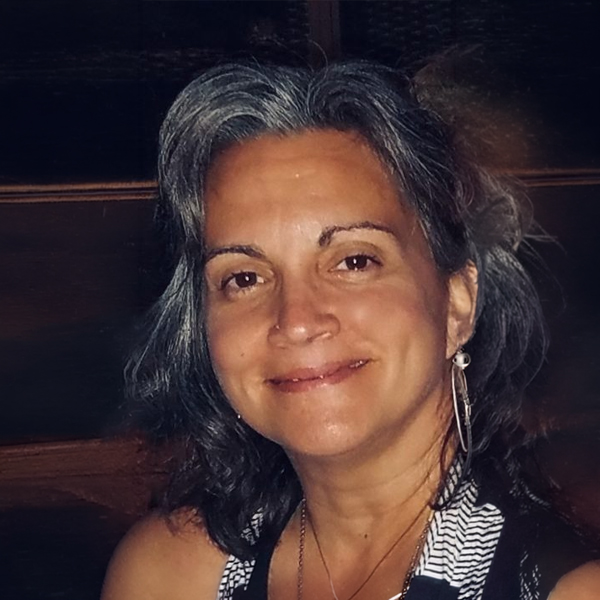
Keveney Davis, LICSW, Program Director, Justice Resource Institute
your instructors

Liz Brenner, LICSW

Rebecca Harvey, PhD

Melissa Nishman, LMHC

course information

Intensive Couple and Family Therapy Certificate Program

Eleven Fridays: 9.4*, 9.25, 10.23, 11,16, 11.17, 11,18, 12.11, 1.8, 1.29, 2.12, 3.12, 4.9, 4.30, 5.21*

  • *The first and last classes, September 4 and May 21, will be live on Zoom and simultaneously live in Newton MA. People who can attend live will be expected in person. The rest of the Friday classes will be live on Zoom
  • We strongly encourage all participants who can to attend the live retreat to do so. There will be a simultaneous live Zoom alternative, if needed, for accessibility.
  • Live In Person Retreat: Monday November 16 at 4 pm Eastern Time through Wednesday November 18, 2026 at 4 pm Eastern time in Essex MA, one hour from Boston Logan airport.
  • Hours: Fridays on Zoom are 8:30am-5pm Eastern (there will be ample breaks from the screen during the day). The two Fridays that are live in person and on live on Zoom are from 9:30 am to 6 pm Eastern time.

Applications Are Open For The 2026.2027 Cohort Of Our Beloved “Intensive” Program

Group informational sessions are required to provide an orientation to the course. This ensures our “Intensive Program” is a good fit for you. Admissions are rolling. Space is limited to 24 participants.

You will be asked to submit your resume or CV upon registering for an informational interview. Applicants are accepted into the program after attending these course orientation meetings. Info sessions include a short 1:1 talk with Liz Brenner, Course Director.

Register for an info session below

Additional Information

Tuition: $3600. This includes 94 CEUs for eligible participants. There is an additional cost of $350 to defray the cost of the retreat. These costs include 6 meals and lodging for those attending live and the tech assistance for those attending via Zoom.

A sliding scale between $2900 – $3500 may be negotiated with participants. The equity rate for BIPOC participants is between $2500 – $3000. Payment plans are available. Sliding scale rates are accessed on a first come, first served basis.
Program graduates may wish to take the course again to enhance their learning. If needed, second time course attendees may also access the sliding scale.
Payment or partial payment is due within two weeks of acceptance into the program to hold your spot. Payment plans are negotiated at the time of acceptance into the course. 
Schedule for Zoom only Fridays:

  • 8:30-9am Participants discuss their reflections/questions about class readings and/or any new skills that they tried
  • 9:30-11am Didactic presentation and discussion of new material
  • 11-11:15am Break
  • 11:15am-12:30pm Practical applications of new material through role play demonstrations and discussion
  • 12:45-1:45pm Lunch
  • 1:45-3:15pm Small group practice of micro skills through role play case examples with close coaching
  • 3:15-3:30pm Break
  • 3:30-5pm Applications of new learning to clinical examples from a range of presenting problems and family types

Families and intimate partnerships can be a source of comfort, protection, and healing. They can also be a place of great distress. Highly skilled help is needed to facilitate individual and relational recovery. The model we teach in our couple and family therapy certificate program supports the needs of a wide range of family groups so that graduates work cross culturally with skill and humility. We attend to the connections between mental health concerns and socio-political factors to minimize constraints and improve wellbeing for all. Throughout the course we spend a minimum of 14 hours explicitly learning anti-racist and anti-discriminatory practices.

Our Intensive Couple and Family Therapy Certificate Program serves helping professionals who provide direct service, supervision, teaching, and program management in a wide range of settings. We serve the needs of beginning and intermediate practitioners as well as prepare advanced practitioners to deepen their knowledge and with capacities to supervise and teach.

There are very few intensive, transtheoretical systemic couple and family therapy certificate programs available for post graduate learners. This course focuses on practices that enhance relationships. Practitioners without adequate training in family systems therapies can inadvertently perpetuate relational problems, further marginalizing vulnerable and intentionally underserved populations. When trauma embedded in relational problems are healed at the source, current and future generations’ health and well being are positively impacted.

This couple and family therapy certificate intensive program is designed for helping professionals interested in the principles and practices of family systems therapies, including, but not limited to, social workers,  mental health counselors, and marriage & family therapists. We design the learning methodology to further develop beginning, intermediate, and advanced helping professionals by supporting improvement of skills for direct practice, supervision, teaching and management positions.

Note: detailed learning objectives for each day of the course are provided to participants and for continuing education approval processes.

  • Identify the purpose, practice and two questions associated with each phase of the 6-phase model.
  • Explain how the use of the concept of interpersonal patterns is foundational to working well across different ethnicities and with other marginalized identities.
  • Describe the cycle of family development and explain how it applies to reframing problems.
  • Describe the problem focused genogram.
  • Explain the model of change from the perspective of each of the following models: general systems theory, structural family therapy, brief strategic therapy, Bowen family therapy, solution focused and narrative therapy.
  • Identify two strategies for assessment used in each of the following models: general systems theory, structural family therapy, brief strategic therapy, Bowen family therapy, solution focused and narrative therapy.
  • Identify two interventions that apply to the use of each model: general systems theory, structural family therapy, brief strategic therapy, Bowen family therapy, solution focused and narrative therapy.
  • Describe one practice for developing treatment goals and plans to address safety issues from the lenses of: general systems theory, structural family therapy, brief strategic therapy, Bowen family therapy, solution focused and narrative therapy.
  • List two questions to ask clients that are used in the practice of each of these models: general systems theory, structural family therapy, brief strategic therapy, Bowen family therapy, solution focused and narrative therapy.
  • Describe the collaborative helping map and explain how it informs effective work with a wide range of presenting problems, ethnicities and people with other marginalized identities.
  • Describe the Racial/Cultural Identity Development Model and the White Racial Identity Development Model.
  • Apply concepts from mindfulness and interpersonal neurobiology to the best practice of family systems therapies.
  • Describe three practices used to invite clients to take responsibility for abusive and other problematic behavior in the context of couple and family work.
  • List one strategy for working with high conflict situations from each of the following models: general systems theory, structural family therapy, brief strategic therapy, Bowen family therapy, solution focused and narrative therapy.
  • Compare theoretical models learned in the course.
  • Critique each model by describing potential limitations of their use: general systems theory, structural family therapy, brief strategic therapy, Bowen family therapy, solution focused and narrative therapy.

Participants MUST attend 100% of the program to earn the Certificate of Post Graduate Training in Couple and Family Therapy and the 94 CEUs for eligible professions. ​CEU certificates will be downloadable at the end of the course after you are fully paid and have completed the evaluation form.

  • Therapy Training Boston is approved by NBCC as an Approved Continuing Education Provider, ACEP No. 6707 for Mental Health Counselors. Programs that do not qualify for NBCC credit are clearly identified. Therapy Training Boston is solely responsible for all aspects of the programs.
  • We have applied for 94 Social Work Continuing Education hours for relicensure, in accordance with 258 CMR. NASW-MA Chapter CE Approving Program and are awaiting approval. Please contact us about the status of SW approved CEs.
  • We have applied for 94  CEUs from the New England Association for Family and Systemic Therapy (NEAFAST) on behalf of the Massachusetts Board of Registration of Allied Mental Health & Human Services Professions for 94 LMFT professional continuing education credits and are awaiting approval.
  • If you are a licensed mental health professional not listed for CEU approval here, please consult the website of your Board of Registration to determine if your our approved CEUs will count toward your continuing education requirements.

More information on CEs here

No refunds are available for cancellations 30 days prior to the start of the course. If participants cancel more than 30 days prior to the event beginning, they may apply the fee to a future program. Events may be cancelled by Therapy Training Boston if minimum enrollment requirements are not met or in the case of other unexpected circumstances. If this occurs, a full refund will be provided.

Course content level: This workshop will provide important information for clinicians who are at an introductory or intermediate level of knowledge about this topic. Advanced practitioners are welcome to attend the event to deepen their knowledge of the subject for practice, supervision, teaching, and administrative roles. Audience: This offering is relevant to all helping professionals including but not limited to social workers, mental health counselors, and marriage & family therapists. There are no conflicts of interest: There is no commercial support for this program.

For all event policies read this.

Student Reflections:

  • training for social workers