
Date: February 7, 2025
Times: 10am-5:30pm Eastern (Find the time for your location)
Instructors: Michele Bograd, PhD, and Liz Brenner, LICSW
Location: Live on Zoom (synchronous). This workshop will not be recorded.
Credits: 6 CEUs

Being Present with Dying and Grieving: Context and Clinical Approaches
How do you think about change when mortality is front and center? How do you see your role as a helper in this context? What ideas do you hold about “appropriate” or “problematic grief?” How attentive are you to dominant cultural beliefs and stories about grief that complicate or isolate the bereaved? Do you speak to the ways that intersectionality and institutional practices shape grief and dying, much less create significant obstacles to care and treatment? What about the often unrecognized burdens on family caregivers? How do you stay present, hold your seat, as a fellow mortal working with the dying, grieving, and those who love them?
Death impacts the work of mental health and other helping professionals in many ways. Clients receive a life limiting diagnosis; their grief persists “long” after a partner dies; they struggle with hard choices regarding aging parents; someone in their life dies unexpectedly or traumatically; a disease process moves more quickly than anticipated; they are a care provider for a loved one who is ill or dying; complicated relationships challenge the processes of dying and grieving. Although death and grief can initiate the beginning of therapy, change its direction or become its focus, very few of us have specialized in-depth training about grief and the end-of-life space. Some of us work in medical and other settings where attending to death, dying, and grieving is our primary role. And still, the journey for the provider is as complicated as it can be for those we help.
This workshop will educate professionals on contemporary models of grief and on clinical approaches to the terminally ill and dying. We will pay special attention to intersectionality or the social and cultural factors that both individualize experiences of grief and dying and can create more harm in the form of prejudicial or biased clinical interventions. The focus will be on the “patient” as well as on the commonly unseen people who care for them day to day and who live in the aftermath of profound loss. Through integrating theories of the neurobiology of grief, mindfulness practices and current clinical theories and models, helping professionals will develop new insights and practices for supporting those in grief and the end-of-life space.
These existential and inevitable events occur in the lives of therapists as well. We will explore the impact on helping professionals, with special attention to the self of the therapist. This will include attention to beliefs, feelings, behaviors, biases, and blind spots in the context of our cultural and historical relational experiences, social locations, and emotional reactions to clients that can affect our work. The effect of moral injury on helpers and clients will be explored. Ideas and practices related to presence and its complexity in the moment-to-moment processes of this work are central to our presentations.
A minimum of one hour of this workshop will be relevant to anti-discriminatory practices and a minimum of two hours will be relevant to anti-racist practice. A minimum of two hours of the workshop will address ethical issues in the context of work with death and grieving.

Michele Bograd, PhD
Michele Bograd, Ph.D. is an individual and couples psychotherapist as well as a certified End-of-Life Doula. Former faculty member of the Family Institute of Cambridge and the Kantor Family Institute, she was also on the staff of Intimacy from the Inside Out (a relational therapy utilizing Internal Family Systems). Following a long career of teaching and writing on a number of issues, she became an end-of-life doula. She serves people with life limiting illness and their loved ones, providing education and training on grief and end-of-life concerns at community and professional levels. www.michelebograd.com
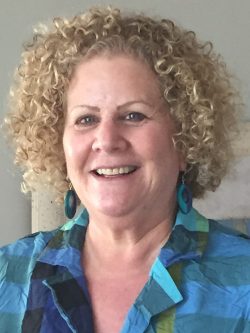
Liz Brenner, LICSW
Liz Brenner, LICSW is the Director of Therapy Training Boston. She is the primary instructor of the Intensive Certificate Program in Couple and Family Therapy. Liz is a Supervisor, Couples and Family Therapy Program, Cambridge Health Alliance, Teaching Associate in Psychiatry, Harvard Medical School; Co-Director of the Harvard/CHA Treating Couples Conference. In 2017, Liz was the recipient of the Greatest Contribution to Social Work, MA Chapter, NASW. Her recent publication in the Family Process Journal is The Development of the Internal Family Systems Model: Honoring Contributions from Family Systems Therapies with Richard Schwartz, PhD, and Carol Becker, PhD. She is the co-author of a forthcoming book What Helps When Children and Families Struggle: An Attachment-Informed Guide for Families and Clinicians with John Stewart, PhD and Erin Belfort, MD.
Schedule:
- Zoom link arrives at 9:30 am EST
- Begins: 10:00 am
- Break 11:30 am-11:45 am
- Learning: 11:45 am-1:15 pm
- Break: 1:15pm-2:15 pm
- Learning: 2:15 pm-3:45 pm
- Break: 3:45 pm-4:00 pm
- Learning: 4:00 pm-5:30 pm
Learning Objectives
- Name three concepts or methods for staying present to clients needs in the face of dying and grieving.
- Describe two ways to think about a client’s death process that informs your clinical approach.
- Explain two common caregiver experiences that may require support.
- List three socio-cultural constraints that can profoundly impact the experiences of dying, caretaking and grieving.
- Summarize ideas from two clinical approaches that you may use to work with this population.
Target Audience
This learning event is designed for helping professionals including, but not limited to, social workers, mental health counselors, and marriage & family therapists. People who attend from professions other than those for whom we are approved for CEUs may check their local Board of License Registration to see if these CEUs will apply.
Cost
- Individual Registration: Regular Rate—$145; Early Bird Rate: $125
- Early Registration Deadline: December 20, 2024
- NEAFAST Member Rate: $120
- Black Therapists Rock, National Association of Black Counselors and all BIPOC clinicians may access an equity rate of $100.
- Please contact us for discount codes. No application is required.
- 6 CEUs will be available at an additional cost of $25 paid upon registration for social workers, mental health counselors, marriage & family therapists and anyone else who determines their board will accept our CEUs.
Location
Live on Zoom (synchronous)
Additional Information
Participants MUST attend 100% of the program to earn the 12 CEUs approved for eligible professions.
CEU certificates will be downloadable within three days of each event after participants complete the workshop or course and fill out the online evaluation.
- Therapy Training Boston is approved by NBCC as an Approved Continuing Education Provider, ACEP No. 6707 for Mental Health Counselors. Programs that do not qualify for NBCC credit are clearly identified. Therapy Training Boston is solely responsible for all aspects of the programs.
 LEARN MORE ABOUT OUR CEUs FOR MENTAL HEALTH COUNSELORS
 - This activity has been certified by the New England Association for Family and Systemic Therapy, Inc., on behalf of the Massachusetts Board of Registration of Allied Mental Health & Human Services Professions for 6 LMFT professional continuing education units. PC- 042460
- LEARN MORE ABOUT OUR CEUs FOR MARRIAGE AND FAMILY THERAPISTS
- his program has been approved for 6 Social Work Continuing Education hours for relicensure, in accordance with 258 CMR. NASW-MA Chapter CE Approval Program Authorization Number D 92906-2. LEARN MORE ABOUT OUR CEUs FOR SOCIAL WORKERS
- Check with your state board to determine whether our approved CEUs meet the criteria for your license

Read detailed information about CEUs here.
No refunds are available for late cancellations. If participants cancel 30 days or more prior to the start of the event, they may apply the fee to a future program. Workshops may be cancelled by Therapy Training Boston if minimum enrollment requirements are not met or in the case of other unexpected circumstances. If this occurs, a full refund will be provided.